
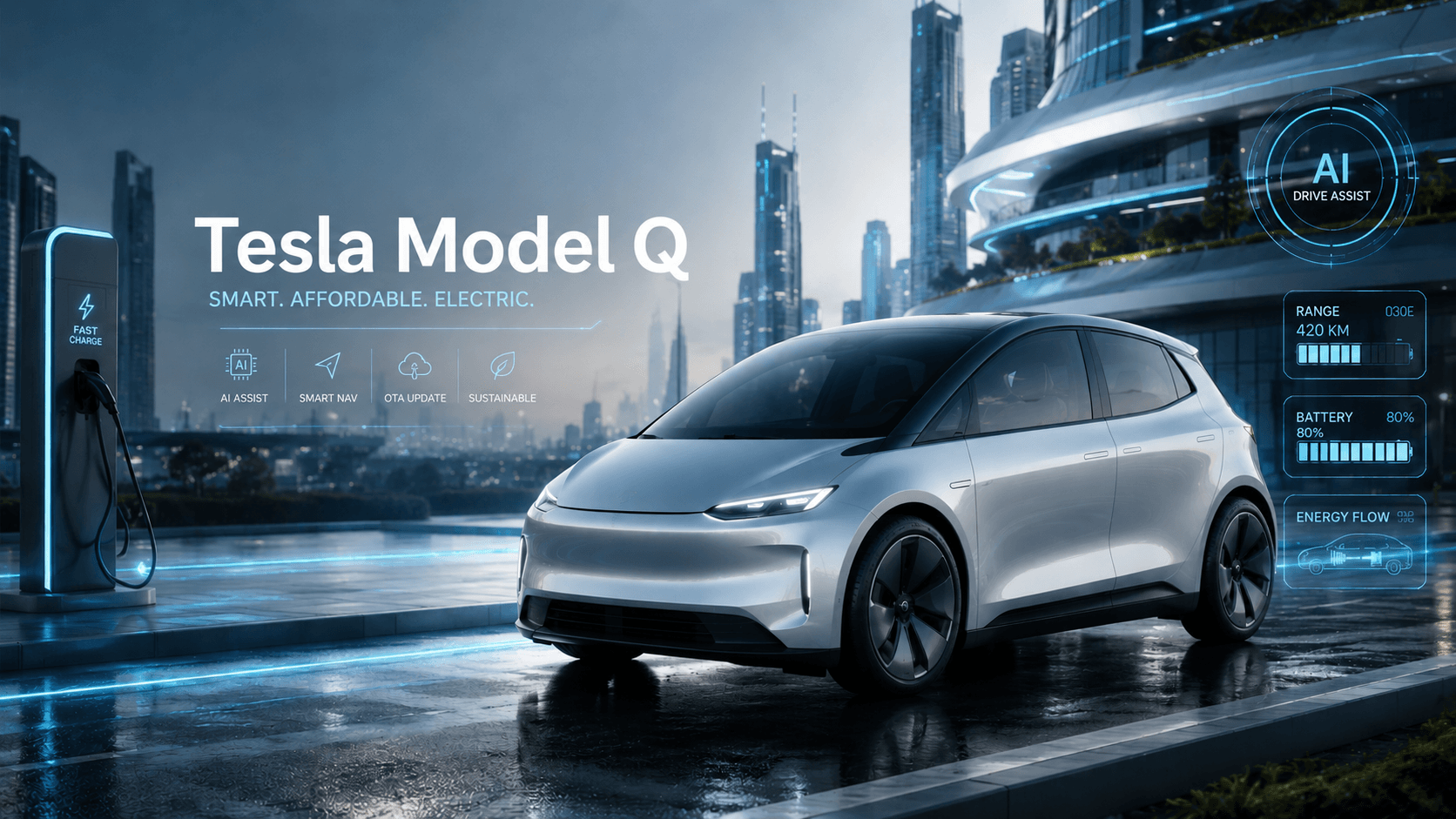
The $25,000 Tesla has been the electric vehicle industry’s holy grail for almost a decade.
This car is maybe the Model Q or the Model 2, but it’s not a rumour anymore.
The little SUV, dubbed Project Redwood, is the cornerstone of Tesla’s road to mass electric vehicle ownership and to thwart fierce rivalries from other world-class budget EV manufacturers.
This is the full specification breakdown, the Unboxed manufacturing revolution, and why this car matters the most in Tesla’s history in this in-depth evauthority.net guide.
Most up-to-the-minute coverage of the Model Q views it as a miniature of the Model 3.
To analyze this car, it’s important to view Project Redwood as a revolutionary approach to car manufacturing.
Other blogs concentrate on the 48V architecture and the Unboxed Process, which are the actual reasons for the $25,000 price tag and still maintain a healthy profit margin.
An Analysis Shows That BYD is Not the Only Company to be Targeted by Elon Musk
Tesla officially has made Project Redwood the company’s most important production priority.
It’s the internal designation of Tesla’s Next-Generation Vehicle Platform, commonly referred to as the Model Q or Model 2 in the automotive world.
Project Redwood is more than just a Tesla; it’s Tesla’s defensive and offensive strategy to take over the sub-$30,000 market.
It’s meant to take on the BYD-Killer role, directly targeting the budget-conscious Chinese exports and entry-level market.
Tesla’s goal with the hybrid vehicle is to be able to sell it at a mass market price point, which would cut production costs in half without sacrificing its high profit margins.
These are two vehicles with Project Redwood skeleton. The first is the manned Model Q crossover and the second is the Cybercab (Robotaxi).
The common platform allows both cars to reap enormous economies of scale, and enables both autonomous driving and inexpensive vehicle ownership.
Tesla Model Q: Launch And Major Announcements (2026)
As of early 2026, Tesla has officially confirmed that the Next-Generation Vehicle Platform is in production.
Tesla hasn’t given up on Model Q, though, as the Affordable Compact was described as the “linchpin” for the company’s projected 2020+ 20 million vehicles per year during the Q1 2016 Earnings Call, where Elon Musk was the speaker.
Major car publications (MotorTrend, Car and Driver) confirm that production has finally started at Giga Texas and is set to start at Giga Berlin.
In May 2026, Elon Musk, the CEO of Tesla, stated during the Q1 earnings call that production of the Next-Gen Platform is beyond the prototype phase.
- The Pivot: Tesla’s pivot from the dedicated Robotaxi (Cybercab) to a “human-driven” version was originally rumored to be cancelled because of the lack of customers for the former, but the change has been made to meet the massive demand in Europe and North America for the latter.
- Production Hubs: Tooling is ongoing at Giga Texas, and is planned to be complete at Giga Berlin and Giga Shanghai by the end of 2026.
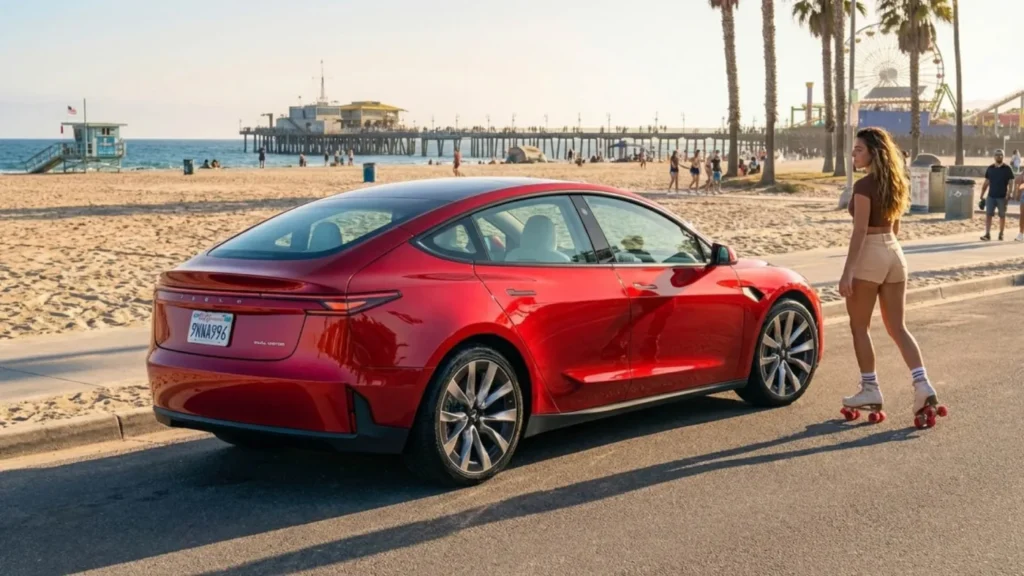
The $25,000 Milestone For The Tesla Model Q
The Model Q will start at $24,990.
- Federal Incentives: Under the 2026 clean vehicle credits, some U.S. buyers may find the effective price to be as low as $17,500.
- Subscription Model: Tesla is likely to provide such extras as heated seating, better acceleration, and the Full Self-Driving (FSD) as a monthly subscription instead of an additional price tag for hardware.
The Tesla Model Q will be available for purchase in India from 2023.
- Production Start: Late 2025 (Limited).
- Start of production: Mid-to-Late 2026.
- Regional Rollout: Texas first, then Berlin and the factory in Mexico.
The early reservation holders in the United States should expect to receive their reservations in Q4.
Tesla sources say 10,000 cars per week will be produced in 2027. Tesla is taking a risk on this mass-market car in an attempt to truly take on VW.
Design Language And Inspiration Of The Tesla Model Q:
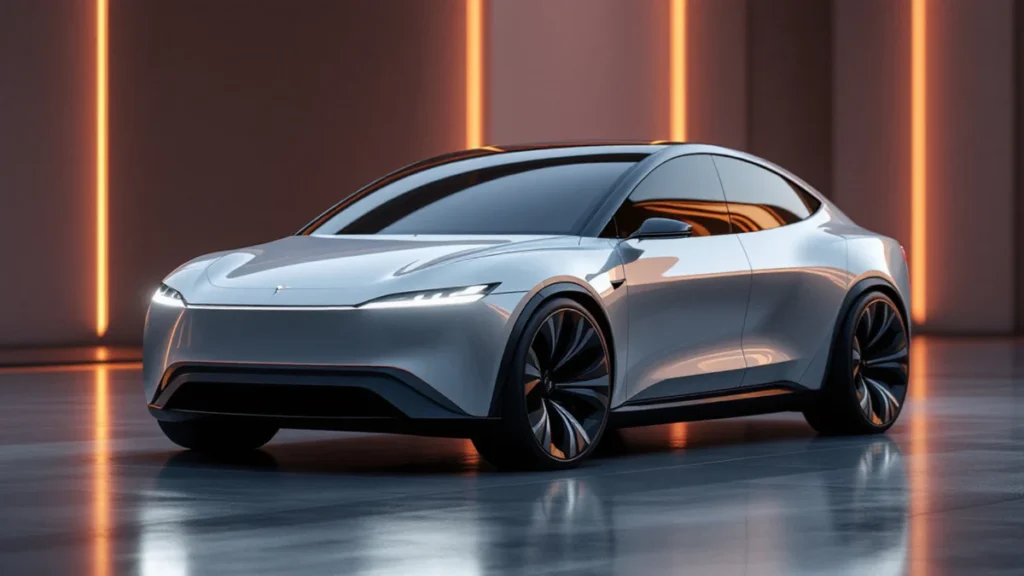
The Model Q is moving away from the S3XY sedan appearance.
- Body Style: A Compact Crossover / Hatchback.
- Aero-Efficiency: Making a machine as efficient as possible to achieve a drag coefficient of <0.21 Cd, which means that they will be able to fly further with a smaller battery.
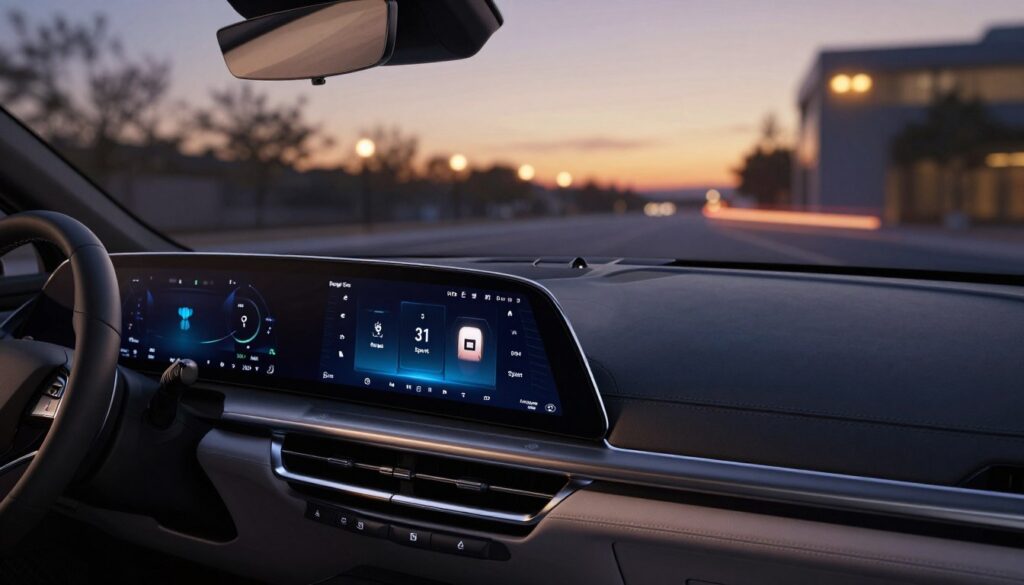
- Interior: Ultra-minimalist. It should be a horizontal screen like the Cybertruck’s UI, but less complicated. The images of the car leaked, and the Redwood supply chain indicate the crossover/lifted hatchback silhouette.
- Exterior: The Model 3 has a more aggressive posture than the Model 3, with a horizontal LED light bar DNA, which is found on the Cybertruck.
Apart from that, there is at least one 15-inch display that remains on the horizontal center of the instrument cluster, and Tesla is said to introduce a more eco-friendly interior (made from recycled materials) to make the vehicle more affordable and appealing to Gen Z buyers.
Tesla Model Q Performance:
- Drive: It is likely to be a high-performance Dual-Motor AWD system, as standard to save cost; a variant is rumoured.
- Technology: Standard Hardware 5 (AI 5) for Full Self-Driving capabilities.
Although it’s a Tesla, the Model Q will not be able to compete in drag racing with a Plaid.
Instead, the push and intent have been quite focused on budget, efficiency, and mileage.
The RWD model has been developed and will be available to hit 0-60 MPH in about 6.5 seconds using a rare-earth-free magnet.
Tesla Model Q Battery Pack And Range:
- Battery: 53kWh LiFePO4 (Lithium Iron Phosphate). LFP is selected because of its lower price and durability (1000+ charge cycles). Why? Because no degradation occurs when charging to 100% capacity each day. This is what it will be for most buyers.
- EPA Range: Projected 250 – 270 miles. This is something that has not yet been completely disclosed by anyone at Tesla or any of the motoring journalists as well.
This is also due to the fact that Tesla has been able to save a fortune, since it’s not using any cobalt or nickel elements in the battery pack.
These components have volatile global pricing, so the MSRP must remain stable for Tesla to make the Model Q a mass-market vehicle.
Where Does The Model Q Fit In The Tesla Lineup?
It’s the Tesla gateway to entry-level.
- Hierarchy: Model Q < Model 3 < Model Y < Model S/X.
- It is also the basis for the Cybercab (Robotaxi), sharing almost 70% of the components inside.
When it comes to components or features, it’s likely to be simple, the smallest battery pack and a bit of a middle ground in creature comforts.
It will be the best of class in terms of fit and build quality, compared to cars in a similar price range, because it’s a Tesla.
Tesla’s going all out, because it’s the model that will be moving volumes in the U.S. and other countries, such as China and India.
A lot of Uber fleet cabs are going to make a shift to this as the rising costs of fuel, particularly after the Iran War.
The Unboxed Next-Gen Platform On Tesla Model Q:
The Unboxed Next-Gen Platform is the engineering backbone of the Model Q (Project Redwood), and marks the biggest change in automotive manufacturing since Henry Ford’s assembly line.
In 2026, as Tesla starts scaling up this platform at Giga Texas and Giga Berlin, the company is shifting away from the linear build process and toward the modularization of parallel processes.
The Unboxed Process divides the car into six separate components and constructs them all at the same time on different sections of the factory:
Even before the car body is added, the Interior Module (Seats, center console and dashboard) is bolted onto the structural battery pack. This provides robots and workers with 360-degree access.
- The Gigacastings: The front and rear underbodies are cast in one large block of aluminum, instead of hundreds of parts stamped and welded together.
- Side Panels: Painted and finished separately from the main panels and then attached. 48V Architecture: The wiring is redefined, with 70 % weight and complexity reduction.
The Tesla Model Q is a New Model that Faces Competition From a Slew of big Rivals.
- BYD Dolphin / Seal: The main Chinese competitors worldwide.
- Volkswagen ID.2all: The affordable EV from Europe.
- Tesla Semi: The primary foreign rival.
- Even its leading competitor might be a 3-year-old used Model: Usefully, it could be a used Tesla Model 3.
Who Will Be The Tesla Model Q’s Target Audience?
- Urban Professionals: People who want a smaller space for parking in the city.
- Gen Z & First-Time Buyers: Tech attracting them, but price preventing them from buying.
- Fleet & Rideshare: The low cost of maintenance makes it the perfect Uber vehicle for fleet services.
The more people realize they lack the amenities associated with community—such as a parking space—Tesla must be able to produce cars that are precisely suited to the new sort of gentrification in the city environment.
In India and China, with their high population density, smaller cars with smaller footprints are needed.
The Tesla Model Q is geared towards new car buyers.
It’s also by far the most affordable in Tesla’s fleet when compared to the Model 3. The difference is between $15,000 to $20,000.
Advantages of the new over current Tesla models:
- Affordability: The price for the Model 3 is about $15,000 higher.
- Maintenance: The LFP battery could be charged to 100% capacity daily and would not degrade much, unlike the older NCA batteries, which would cause significant degradation.
- Maneuverability: A shorter wheelbase translates to a much greater ability to handle on European and Asia city streets.
Lower MSRP will also mean lower insurance quotes, which is a big pain for Model 3/Y owners.
It’s the Dawn Of The Next-Gen Tesla Era!
The Tesla Model Q (Project Redwood) is much more than an economy electric car.
It’s an open threat to the price wall that has long been in the way of EVs for the masses of the world.
With the Unboxed Next-Gen Platform, Tesla has effectively changed the rules of the game when it comes to automobile manufacturing, abandoning the linear manufacturing lines of the past century in favor of a more modular approach that cuts costs up to 50%.
The Model Q is a one-time entry point for the prospective buyer that offers no compromises with Tesla’s ecosystem.
At its projected $24,990 starting price, its long lifespan, ability to charge daily 100%, and the world’s most advanced 48V electrical architecture fill the gap between high-tech and affordable.
With production ramping up at Giga Texas and Giga Berlin for 2026, the Model Q will soon be the standard that will test all domestic competitors alongside global giants such as BYD.
From the perspective of an urban commuter seeking a nimble, easy-to-manoeuvre city car to a first-time EV buyer hoping for the best price, the Model Q is not merely the next Tesla; it is the car that will set the tone for the next ten years of sustainable mobility.